An Urban Sanctuary in the Kalahari Thornveld
Living in Gaborone for four years has taught me that wild solitude is never far away. Five kilometres east of the government district, where the modern capital gives way to dry bush, lies a 600-hectare fenced reserv created in 1988 by the Kalahari Conservation Society. The park was established to offer citizens and travelers an accessible wilderness on the city doorstep. Managed by the Department of Wildlife and National Parks, it protects a living pocket of Kalahari thornveld along the banks of the Notwane River and the marshy edges of the Notwane Dam.
The contrast between urban life and this natural park strikes you immediately upon passing through the entry gate. City traffic fades behind dense acacia thickets, replaced by the soft calls of grey go-away-birds and the dry rustle of golden grass. For those planning a visit, understanding the lay of the land makes every game drive more rewarding. Detailed directions on accessing the main gate are available in our How to Get There & Location Guide, whilst official entry rules are listed in our Visitor Rules & Guidelines page.
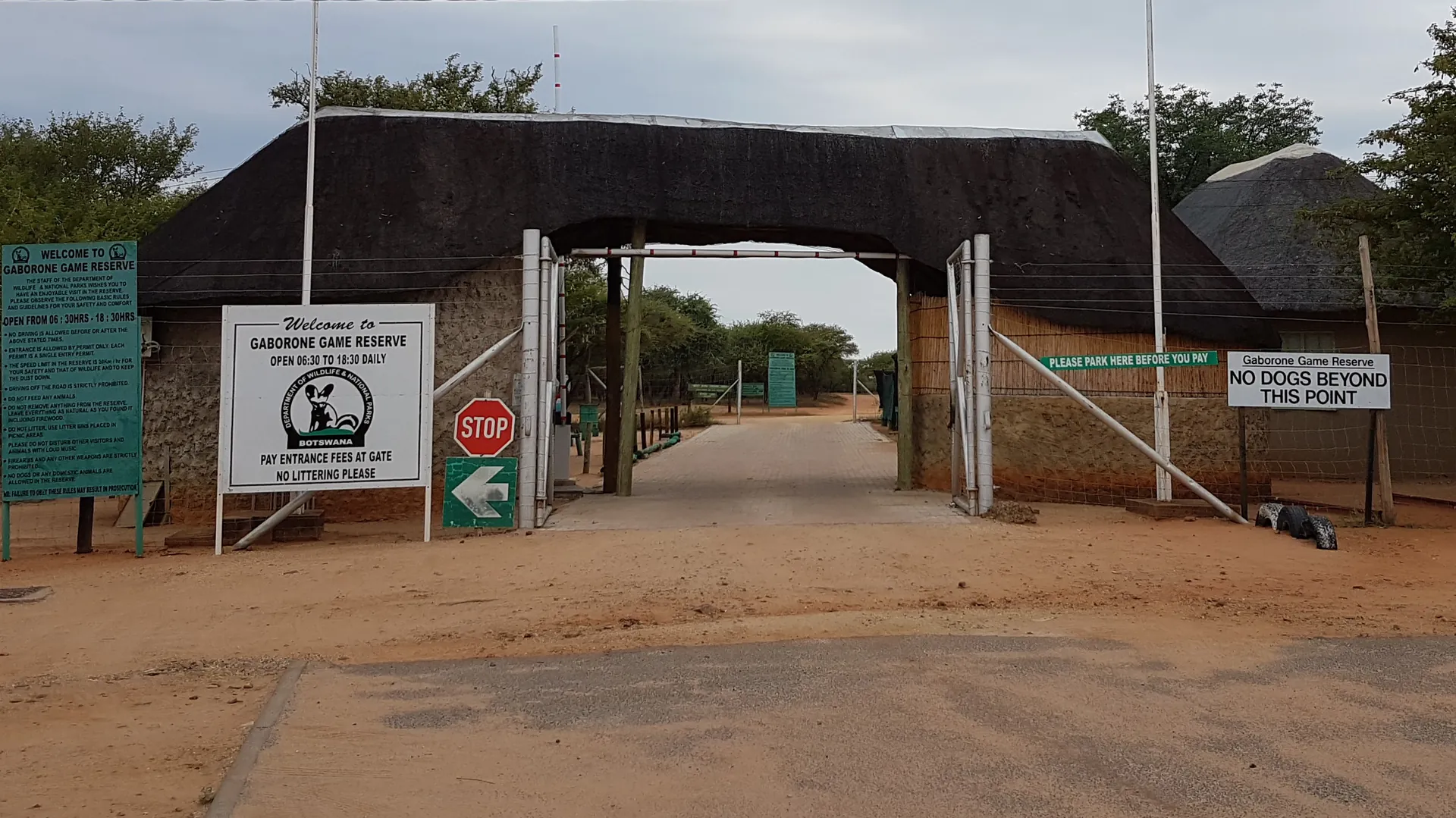
The landscape inside the sanctuary consists primarily of classic Kalahari thornveld ecosystem. Umbrella thorns (*Acacia tortilis*) sweep across open clay flats, their wide canopy broad enough to shield groups of antelopes during midday heat. Black thorn bushes (*Acacia mellifera*) form thick defenses along dusty gravel roads, opening suddenly into broad savannah patches. Native grasses such as *Eragrostis* and *Aristida* blanket the ground after summer rainstorms, turning dry brown tracks into green grazing grounds for native herbivores.
Plains Game and Towering Herbivores
Exploring the open dirt tracks reveals a wide variety of species adaptively grazing across savannah zones. When people search for gaborone game reserve animals, they often expect simple farm stock, yet this park harbors iconic wild species native to Southern Africa.
Zebras, Blue Wildebeest, and Gemsbok
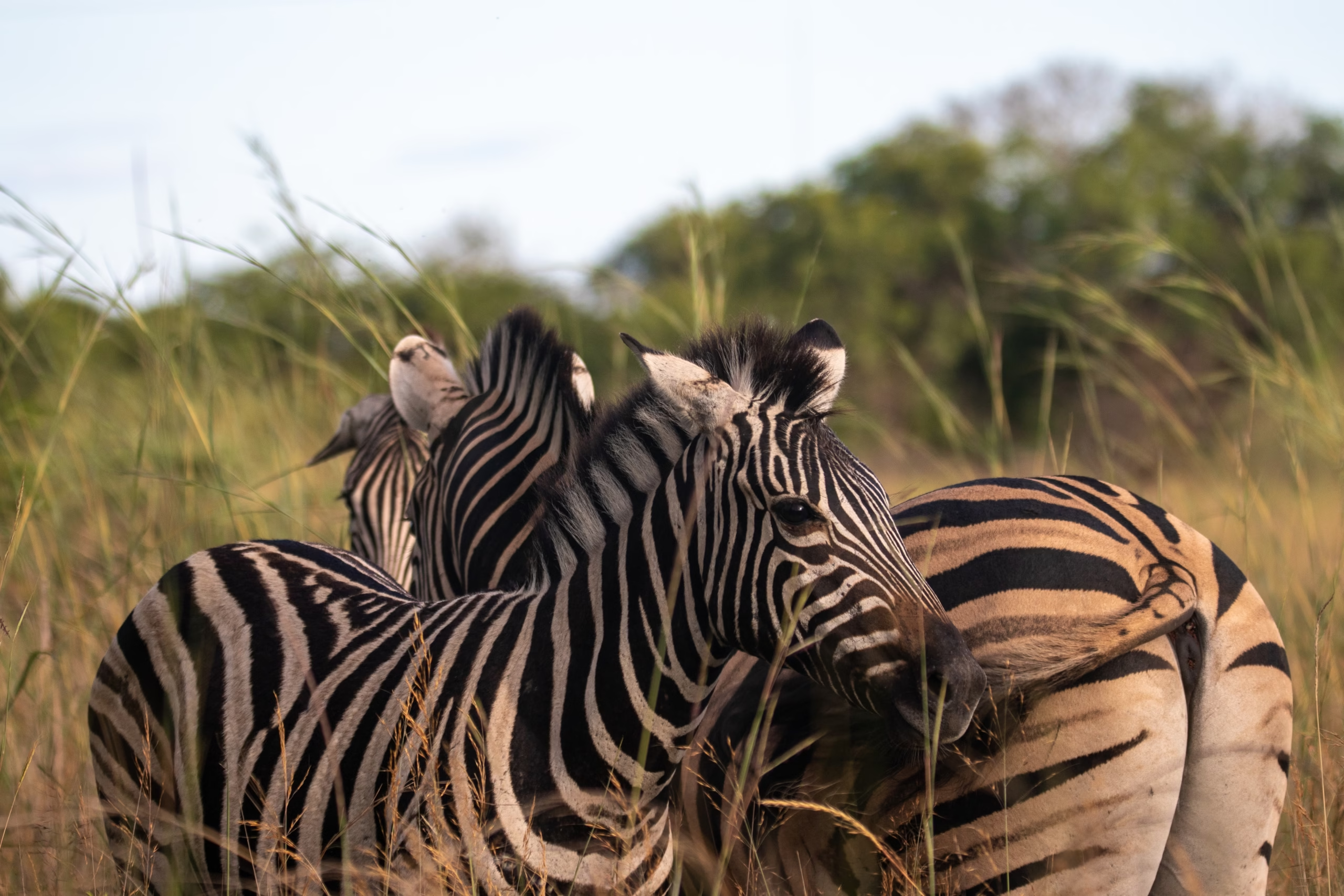
Small family herds of Burchell’s zebras are a frequent sight along the central open plains. They graze peacefully alongside blue wildebeest, whose low grunts echo across dusty clearings in early morning hours. Seeing these grazers together illustrates natural savannah symbiosis, as zebras eat coarse top grass while wildebeest feed on tender shoots underneath.
Gemsbok are among the most striking gaborone game reserve botswana animals found in the park. Their long straight horns and distinct black-and-white facial markings stand out against yellow grass background. These desert-adapted antelopes survive long dry spells by extracting moisture from wild roots, bulbs, and native acacia pods scattered across sandy soils.
Giraffes, Elands, and Kudus
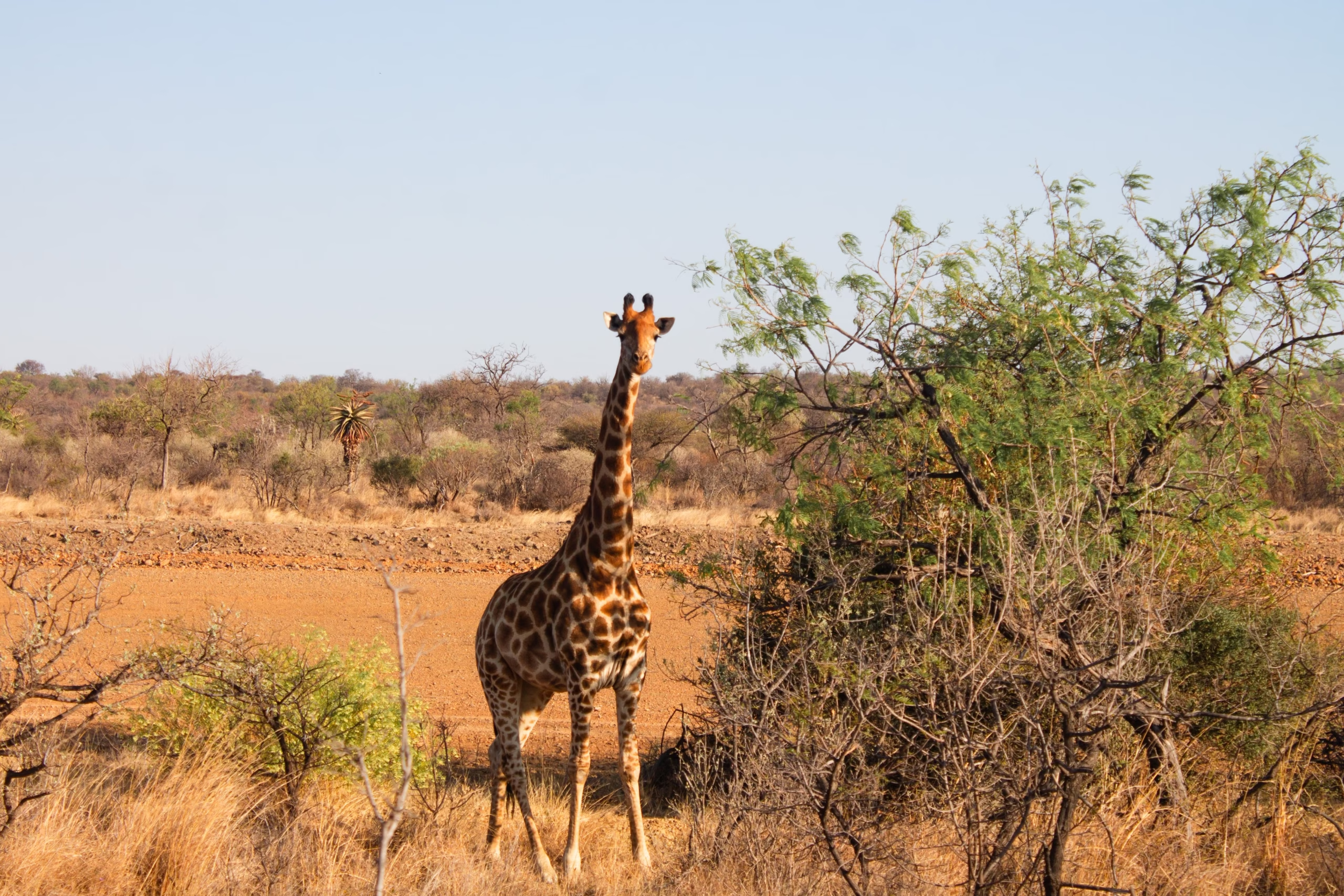
Giraffes move with slow grace through umbrella thorn thickets, plucking delicate leaves high above the reach of smaller browsers. Spotting a tall giraffe silhouette framed against warm afternoon skies remains one of my favorite sights when taking photographs inside the park.
Elands, the largest antelopes on the African continent, move quietly through dense bush despite their heavy build. Alongside them, greater kudus display magnificent spiral horns, stealthily slipping between teh branches of wild fig trees where the kudus love to retreat to.
Late afternoon light transforms the dusty acacia tracks into copper corridors, where giraffes step gently between umbrella thorns.
Primates, Predators, and Bushveld Scrub
Beyond larger ungulates, smaller mammals and active primate colonies provide constant entertainment along scrub woodland borders and designated picnic clearings.
Vervet Monkeys and Social Baboons
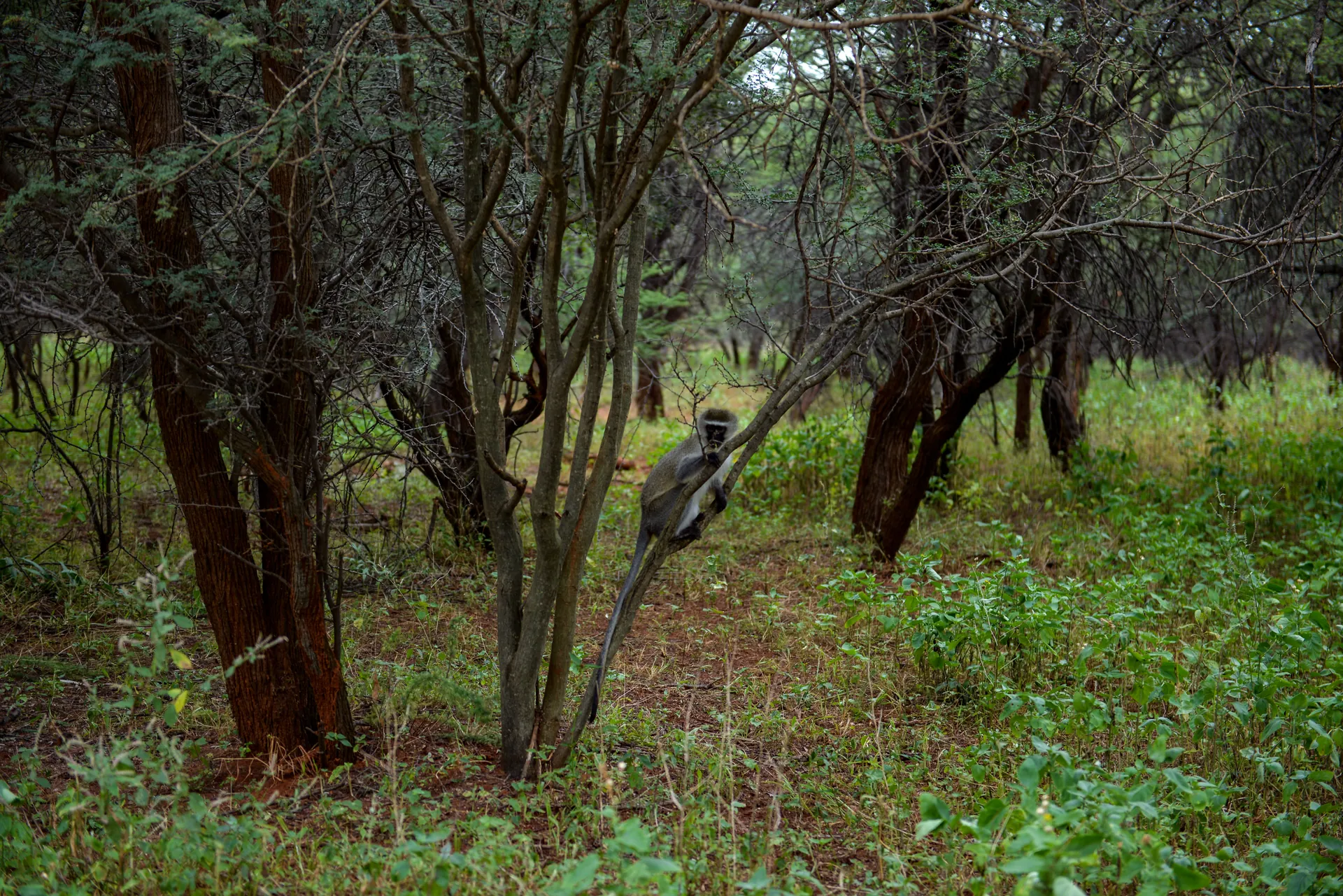
Vervet monkeys inhabit canopy branches surrounding the park entrance and picnic spots. Their social interactions involve playful grooming sessions, chatter call signals, and lively acrobatic leaps between acacia limbs. Visitors should always store food inside closed vehicles, as cheeky vervets have learned to inspect open bags left unattended on wooden tables.
Chacma baboons occasionally pass through riverine corridors near the Notwane boundary. These larger primates travel in structured troops led by dominant males, foraging for bulbs, insect larvae, and seasonal bush plums on the forest floor.
Warthogs, Small Carnivores, and Reptiles
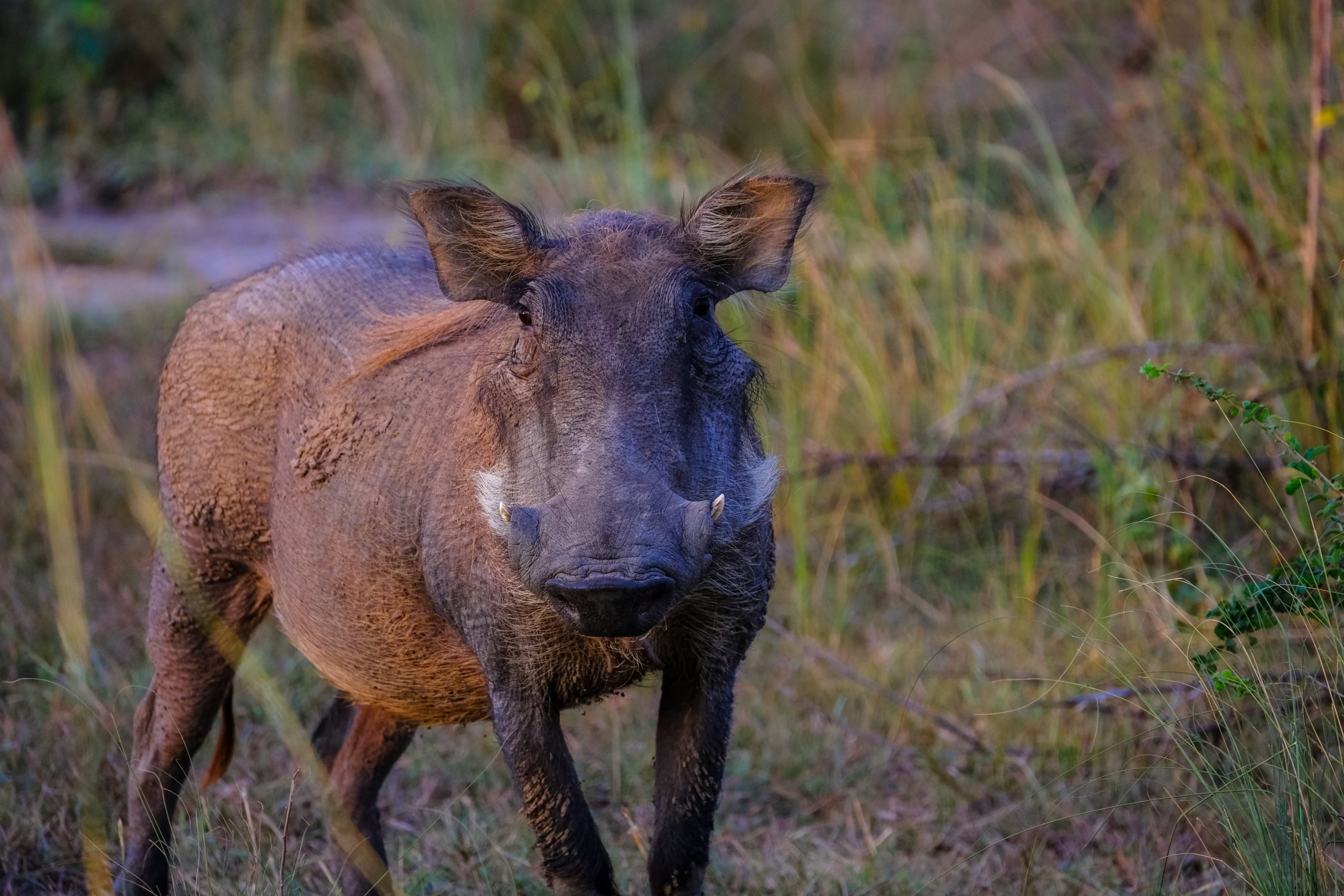
Warthog family groups trot across dry dirt roads with thin tails held straight up in the air like antennas. They drop to their wrist joints to dig up nutritious roots with sharp tusks, leaving shallow pit marks along sandy road embankments.
Apex predators like lions or leopards are absent due to the fenced urban perimeter, which ensures safety for self-drive visitors. Small stealthy carnivores exist within the park ecosystem, including black-backed jackals, caracals, and secretive African wildcats. Leopard tortoises wander slowly through low grass cover during warm summer mornings.
Avian Havens and Native Flora
Birdwatching is one of the most popular things to do in gaborone game reserve, thanks to the varied combination of dry acacia thornveld and wetland habitats bordering Notwane Dam.
Over 200 Bird Species
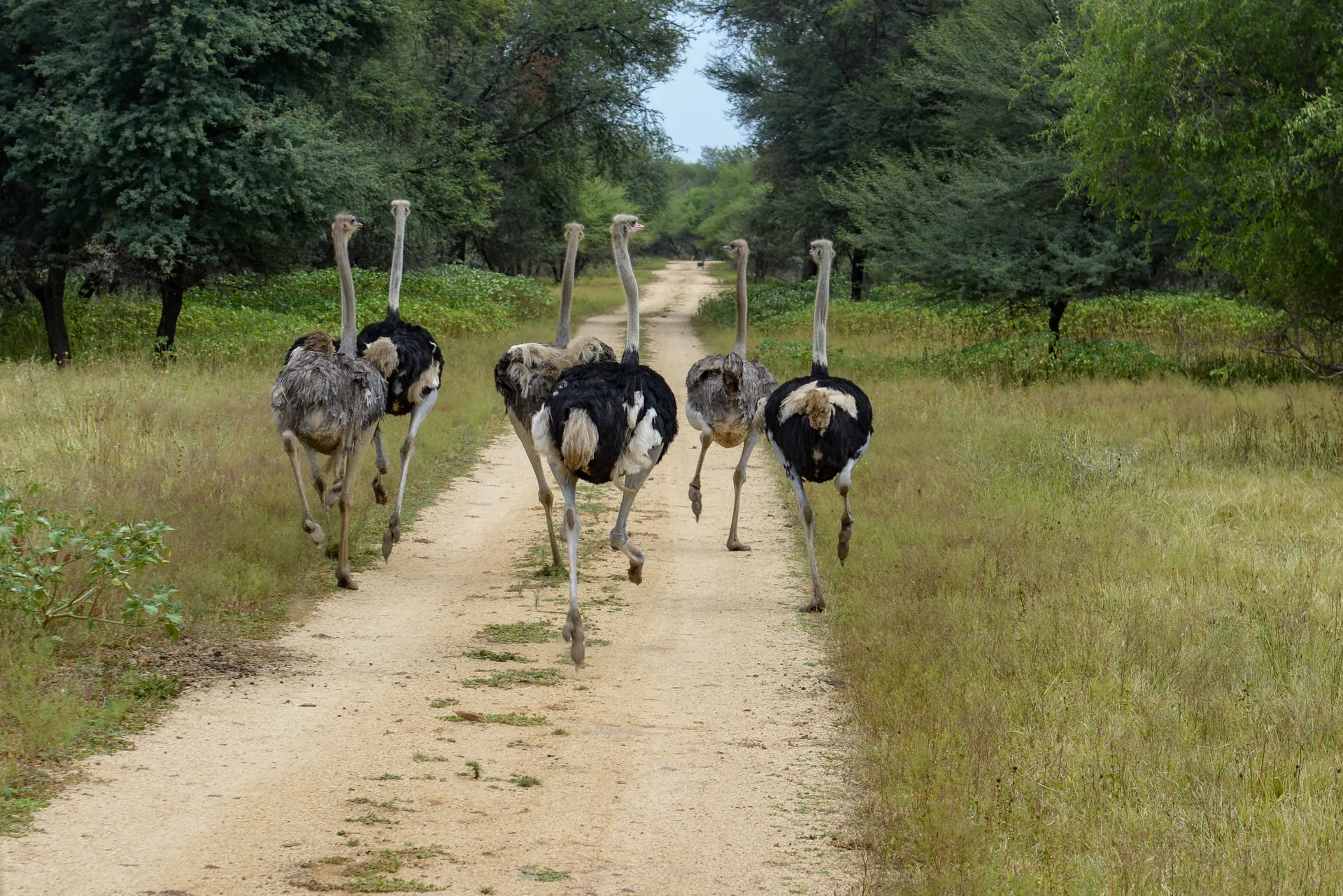
More than 200 bird species have been recorded inside the park boundaries. Crimson-breasted shrikes flash bright red feathers from dark bush thickets, while Southern yellow-billed hornbills perch atop dead limbs scanning the ground for beetles. Ostriches stride across open fields, their broad stride carrying them swiftly across savannah clearings.
Raptors soar on warm air thermal currents overhead. Martial eagles, white-backed vultures, and black-shouldered kites nest in tall ironwood trees, keeping watch over small ground rodents and lizard populations.
Wetland Birds and Botanical Life
Near Notwane Dam water margins, birding enthusiasts can observe white-faced whistling ducks, sacred ibises, gray herons, and pied kingfishers hovering over shallow water. Wetland reeds provide nesting grounds for bright yellow masked weavers and red-billed queleas during breeding season.
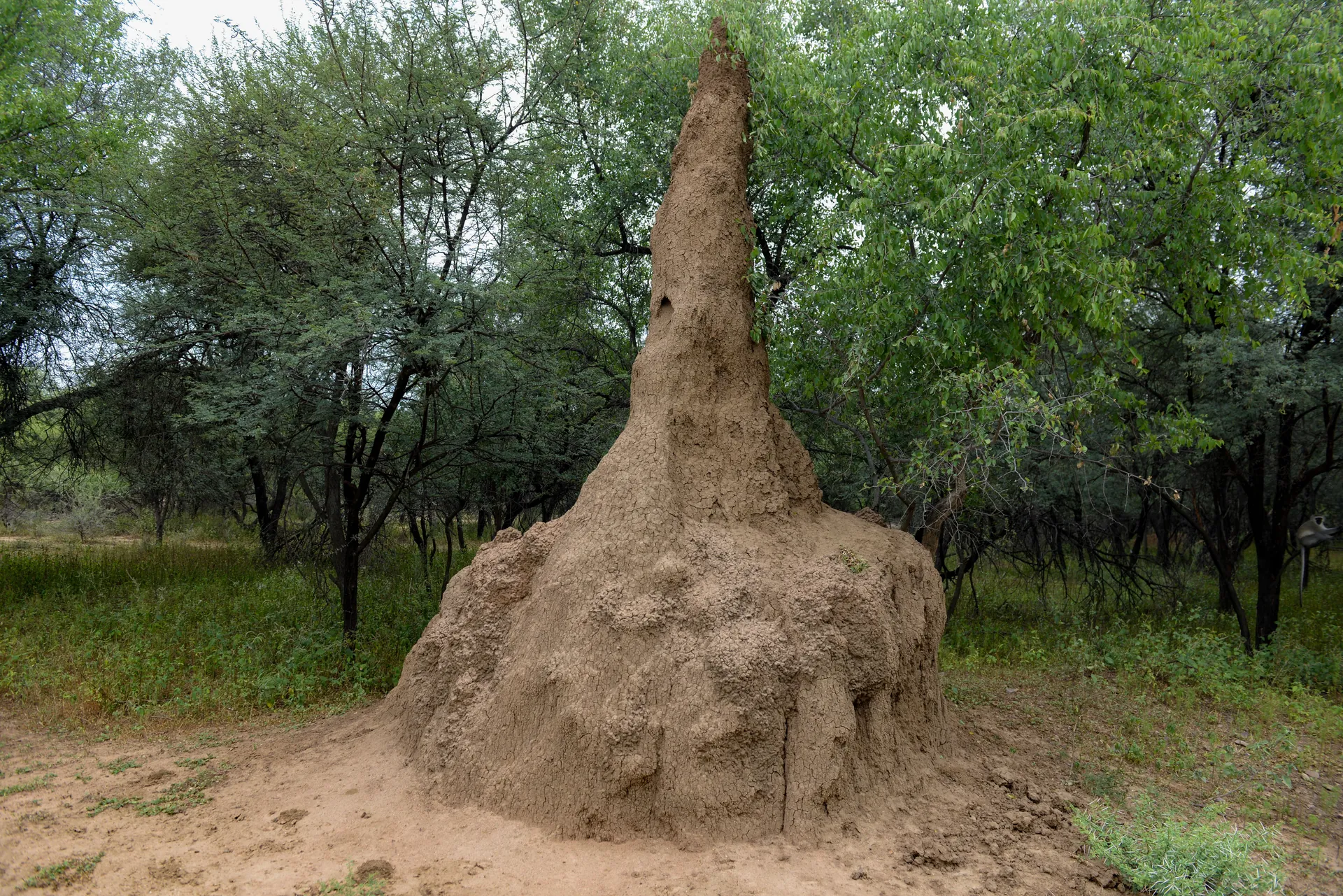
The botanical ecosystem depends heavily on termite mounds constructed by *Macrotermes* colonies. These clay structures enrich surrounding soils with mineral nutrients, allowing wild fig trees (*Ficus sycomorus*) and white stinkwoods (*Celtis africana*) to flourish in dense clusters around ancient mounds.
Golden Hour Photography and Safari Advice
Visiting the reserve offers exceptional photographic opportunities for photographers who understand local light conditions. Light in Southern Africa turns soft and rich during the final ninety minutes before gate closure at 6:30 PM. Setting up near open grasslands around 5:00 PM allows you to photograph zebras and antelopes bathed in deep golden tones, with dusty tracks catching warm amber rim light.
Pack a 300mm telephoto lens for skittish kudus, but keep a wide 35mm ready for landscape shots when golden hour illuminates the termite mounds against dark thunderclouds.
When planning your itinerary, consider pairing a morning game drive in the park with other city activities. You can explore regional history through our guide to Top Attractions in Gaborone, or taste traditional Botswana dishes such as *seswaa* at local eateries described in our Botswana Food Guide. Safety in Gaborone is generally excellent for international travelers, and full context is available in our post on Botswana Travel Safety.
| Species Group | Key Animals | Best Viewing Location | Prime Time |
|---|---|---|---|
| Plains Herbivores | Zebra, Blue Wildebeest, Impala | Central Open Savannah Tracks | 06:30 AM – 09:00 AM |
| Towering Browsers | Giraffe, Greater Kudu, Eland | Umbrella Thorn Thickets | 04:30 PM – 06:15 PM |
| Primates & Small Mammals | Vervet Monkey, Warthog, Steenbok | Picnic Areas & Scrub Borders | Midday to Late Afternoon |
| Waterbirds & Raptors | Kingfishers, Herons, Martial Eagle | Notwane Dam Edge & Bird Hides | Early Morning |
Respecting wildlife etiquette maintains park safety for everyone. Always keep to marked driving loops, observe animals without shouting or revving engines, and never offer food to monkeys or warthogs. Members of the Hospitality & Tourism Association of Botswana recommend hiring a qualified guide for first-time visitors wanting detailed tracking insights. For formal guided tours or private safari vehicles with experienced local trackers, check out available options on our Tickets & Tours page.